Confidential Generative AI in Healthcare Circuit Diagram AI assistants handle 85% of user requests, reducing workloads and improving user experience. Data gathering, model training, interface development, testing, and deployment are the five most crucial steps in AI assistant development. AI assistants evolve to "think" like humans and recognize emotional cues, enabling more empathetic interactions. Healthcare decisions often require integrating information from multiple sources, such as medical literature, clinical databases, and patient records. LLMs lack the ability to seamlessly access and synthesize data from these diverse and distributed sources. This limits their potential to provide comprehensive and well-informed insights for healthcare applications. In this blog post, we will 🤖 Symptoms Detection: using Artificial Intelligence for specialist recommendation and illness detection. 📅 Appointment Scheduling: based on the nearest doctor to your location or the first available appointment. 📘 Medical Records: securely stored in the blockchain using smart contracts. 💬 Blogs and Forum: using machine learning for patient satisfaction prediction.
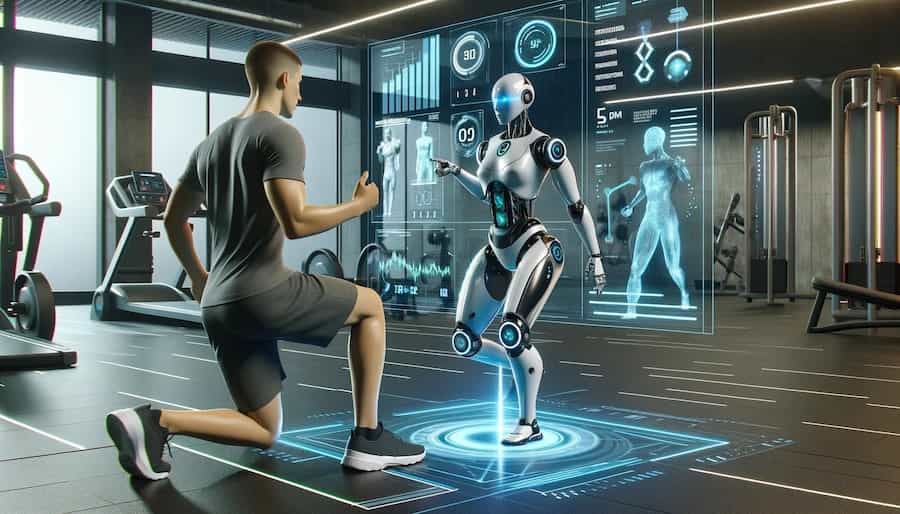
The Potential of AI Assistants. AI assistants have the potential to revolutionize patient engagement by providing instant, 24/7 support. These assistants can help bridge the gap between patients and healthcare providers, offering a more efficient way to manage health concerns. By 2030, AI chatbots will: make healthcare more accessible and inclusive by creating smaller healthcare centers connected digitally; let healthcare systems predict when someone is at risk of chronic diseases; help reduce wait times, make work easier for doctors, and take care of administrative tasks. AI Virtual Assistant In Healthcare Use Cases:

Powered Virtual Health Assistant Circuit Diagram
"We are at the start of a medical revolution, potentially similar in scale to the discovery of X-rays," says Santiago Romero-Brufau, M.D., Ph.D., Program Director of Implementing Health Care AI into Clinical Practice, and Adjunct Assistant Professor in the Department of Biostatistics at Harvard T. H. Chan School of Public Health. "Over This article opens the door to countless possibilities in healthcare applications. From personalized care to improved accessibility, this app is a step toward the future of AI-driven health diagnosis assistants. Feel free to experiment and enhance this basic healthcare assistant we have set up. Who knows, one day it might save a life. The Role of AI in Smart Healthcare. Artificial Intelligence (AI) is fundamentally transforming the landscape of healthcare, especially through its integration into smart healthcare devices.These devices, powered by AI, can continuously monitor patients' health and provide real-time insights, which can significantly improve the quality of care and patient outcomes.
